
SCREEN TIME: are you monitoring it?
Recently, in an airport check-in queue, I observed parents struggling with their two year old. He was in a stroller, screaming and poking wildly at the Ipad he was holding. One harassed parent tried to take the device to restore whatever he had been watching. The frustrated child screamed louder and snatched the device to his chest. Eventually, working together, both parents managed to get their child back to what he had been watching and peace of a sort was restored.
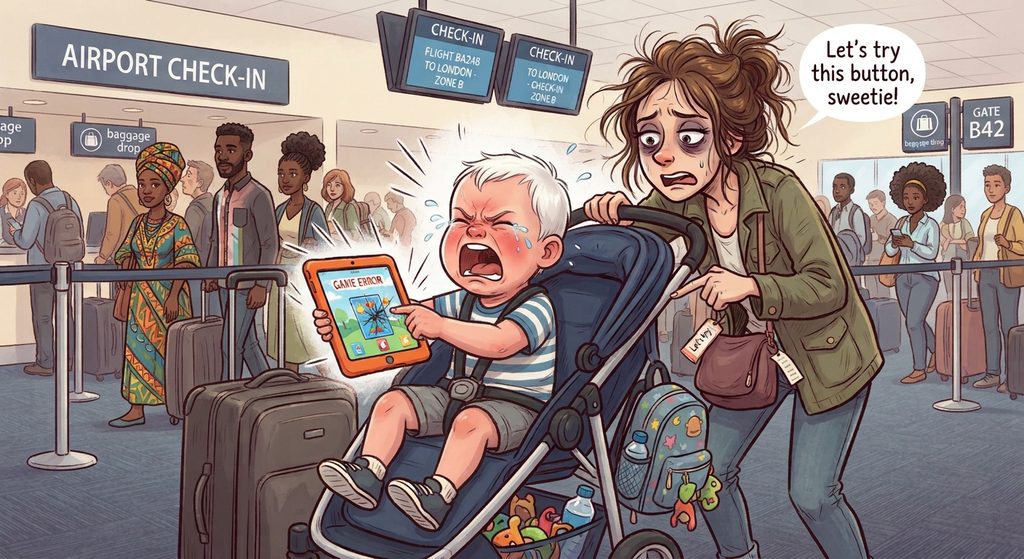
The drama left me a bit shaken. My sympathies are always with parents of exhausted, fractious children. I’ve been there and done that. But what disturbed me profoundly – as a parent and an educator – was the child’s obsession with the device.
These days there is a far greater awareness of the damage done by too much screen time in early years – as well as the rest of the extremely formative years in childhood. Some of it is just common sense – too much sitting and focusing on one thing, instead of running around and playing, is simply not good for physical and cognitive growth. Governments internationally are passing laws about teenagers and social media, with research revealing the social-emotional damage inflicted by these sites.
Screens have now been around for long enough to prove that excessive screen time in young children is primarily linked to lower thought processing, creative and problem-solving skills, delays in language acquisition and shorter attention spans. Whilst high-quality, age-appropriate educational media can offer some positive benefits, it’s now accepted that prolonged and passive screen exposure during early childhood actually alters brain wiring at the expense of real-world learning.
Impact on Executive Function and Brain Structure
Weakened self-regulation: Heavy screen usage slows down the development of ‘management’ functions, which are responsible for memory, impulse control, and emotional regulation.
Altered brain development: Structural brain imaging studies, including landmark research by the National Institutes of Health (NIH), show that children with high screen exposure show reduced myelination in the brain’s white matter – which supports language and cognitive processing – and a premature thinning of the cortex linked to critical thinking.
Language and Communication Delays
The “displacement” effect: The primary harm to language development is that screens replace active, back-and-forth verbal communication with parents and caregivers.
Slower acquisition of vocabulary: Studies show that children under five who average more than two hours of screen time per day face up to a 50% higher communication and problem-solving delays, as the brain struggles to translate two-dimensional screen concepts into real-world application.
🎯 Attention and Memory Function
Overstimulation: Fast-paced digital content and rapid camera cuts overwhelm a young child’s limited processing limits. This constant, exaggerated visual stimulation sets an unrealistically high threshold for focus, making slower, real-world tasks (like reading or classroom learning) seem boring by comparison.
Disrupted memory consolidation: Screen use before bed suppresses melatonin and disrupts deep REM sleep. Without sufficient REM sleep, the brain cannot properly process and store the information a child learned during the day.
Of course, not all screen time affects the brain equally. The impact depends entirely on how screen time is managed.
For example, scrolling is highly linked with emotional disorders, including emotional meltdowns and roller coasters, and trouble managing these. Interactive educational content used in moderation can support basic literacy and numeracy. Co-viewing and follow-up conversations with an adult can have positive effects, linking the material to real life
Expert Recommendations for Parents
Health organisations, such as the American Academy of Pediatrics (AAP), suggest the following to protect early cognitive development:
Under 2 years old: Avoid screen time entirely, except for interactive video chatting with family.
Ages 2 – 5 years: Limit screen time to a maximum of one hour per day of high-quality, slow-paced educational programming.
Prioritise the “Big Three”: Ensure that screens never crowd out physical play, good nutrition and healthy sleep routines. These are the core pillars of early childhood brain growth.
Thank you to NIH and aap.org for their input, and to AI for the AI generated image above. We also recommend the book, “The Anxious Generation” by Jonathan Haidt – for parents of children and teenagers using social media.